
Atendimento ao Cliente
Frequently Asked Questions
General, model-specific and regional export answers for buyers of Chinese Heavy Trucks HOWO and SHACMAN vehicles.
Brand FAQ
Chinese Heavy Trucks HOWO
Global purchasing, export and ownership information for new Chinese Heavy Trucks HOWO vehicles.
Payment & Cooperation
Which payment methods do you accept?
We accept telegraphic transfer (TT) and letters of credit (LC). The standard arrangement is a 30% TT deposit with the balance paid before shipment. We also accept sight LC and 30-, 60- or 90-day usance LC.
Where is the factory, and can I visit for an inspection?
The Chinese Heavy Trucks vehicle production base is in Jinan, Shandong Province. Jinan is about 1.5 hours from Beijing by high-speed rail, 2.5 hours from Guangzhou by air and 4 hours from Shanghai by high-speed rail. Customers are welcome to schedule factory visits and vehicle inspections.
Are all vehicles brand-new, and do you sell used vehicles?
All Chinese Heavy Trucks vehicles and construction vehicles we supply are brand-new factory-built units. We do not export used vehicles. Buyers seeking used vehicles should contact a specialist used-vehicle supplier.
Can different vehicle models be shipped together in one order?
Yes. Tractors, dump trucks, cargo trucks and spare parts can be combined in one sailing. Our sales team calculates loading space and coordinates the production schedule.
Model Selection & Road Conditions
Which HOWO tractor is suitable for muddy or gravel roads in Africa?
The HOWO 6×4 tractor is a primary choice for unpaved roads overseas. Its tandem rear drive improves traction and load capacity, while a reinforced frame and heavy-duty drive axles suit mud, rough surfaces and climbing. Choose a HOWO TX or T7H 6×4 for long-distance heavy loads, or an economical HOWO 6×4 model for short regional routes.
What gross combination weight can a HOWO 6×4 tractor and container semi-trailer handle?
A standard HOWO 6×4 combination can reach a gross combination weight of 60–70 tonnes, supporting long-distance transport of 40-foot containers in Africa and Latin America.
What is the difference between the HOWO T7H and HOWO TX?
The HOWO T7H offers a high-output engine, a wider double-sleeper cab, lower fuel consumption at highway speeds and greater load capability for long-distance cross-border container transport. The HOWO TX is a cost-effective entry model with lower purchase and maintenance costs and a compact cab for regional and medium-distance logistics fleets.
Can you provide left-hand-drive and right-hand-drive vehicles?
Yes. Left-hand-drive and right-hand-drive configurations are available to suit traffic regulations in different markets.
Configuration & Logo Service
Can the configuration be customized for local roads and payloads?
Yes. Engine output, fuel-tank capacity, suspension, tyre specifications and sleeper-cab options can be adjusted. Water tanks, toolboxes and power take-off (PTO) systems are available. Euro II, Euro III and Euro V emissions versions can be supplied for different import requirements. Body colour can be changed, and a buyer’s company logo can be applied to the cab and body side panels.
Can you apply our company logo after the vehicle is completed?
Yes. After production, we can apply a custom logo according to the buyer’s artwork without an additional processing charge.
Fuel Consumption & Service Life
What is the approximate fuel consumption of a HOWO tractor?
Fuel consumption under standard unladen or rated-load conditions is approximately 35 L/100 km. Consumption rises with full loads, climbing and muddy roads, and actual results depend on payload, road conditions and driving habits.
How long can the vehicles operate with proper maintenance and genuine parts?
With maintenance performed to specification, a HOWO T7H can operate for more than 1 million kilometres, while a HOWO TX can reach approximately 700,000–900,000 kilometres. Used-vehicle value also depends on condition, service history and the local market.
Production & Ocean Shipping
How soon can vehicles be dispatched after the deposit, and how long does ocean shipping take?
After receipt of the deposit or LC, the production cycle is approximately 45 days for trucks and 35 days for construction machinery. Ocean transit is approximately 40 days to Africa or South America and about two weeks to Asia or Southeast Asia.
Which ocean-shipping options are available for volume purchases?
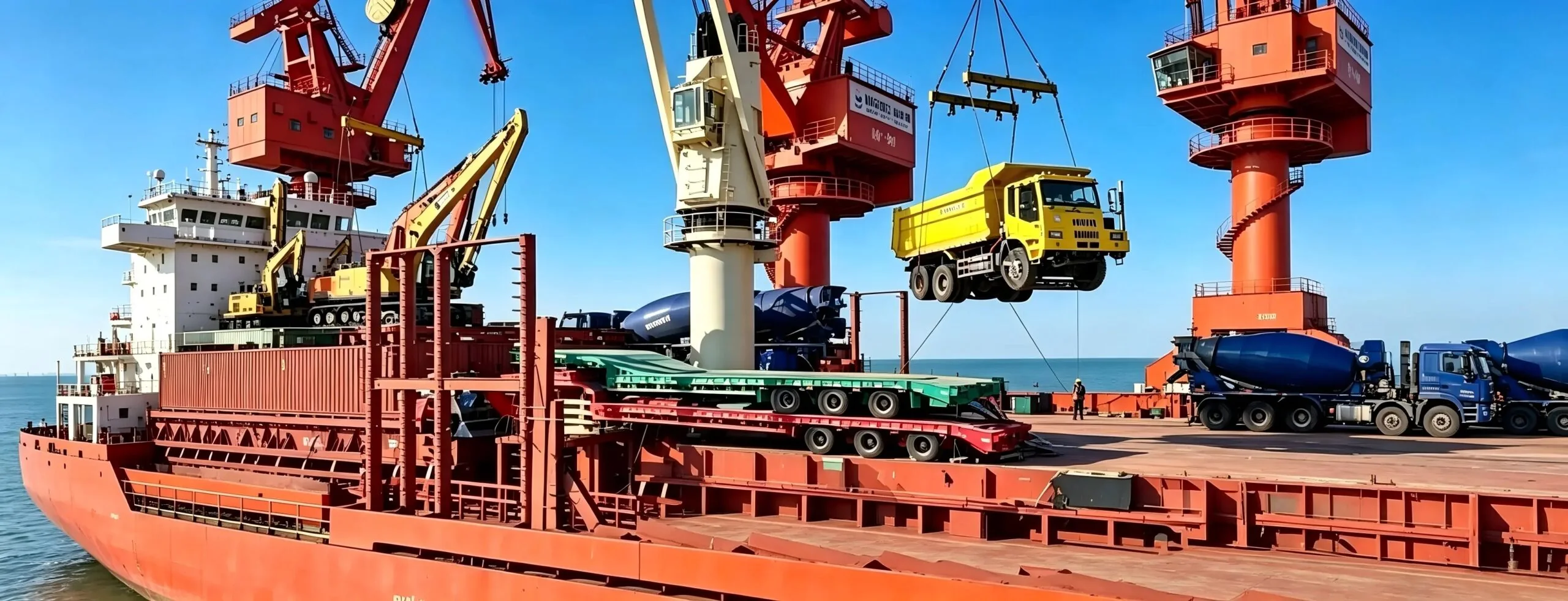
Roll-on/roll-off shipping is generally preferred for batches of heavy-duty trucks because vehicles are driven directly aboard and face less handling damage. Flat-rack containers are suitable for smaller orders and shorter routes in Southeast Asia. We compare options for the destination port and recommend the most cost-effective plan.
Do you have vehicles in stock?
Please provide the model, drive configuration, payload and other required specifications so we can check current inventory. Stock availability cannot be guaranteed, and popular models should be scheduled in advance.
Export Documents & Registration
Which export and customs-clearance documents can you provide?
The document package can include the commercial invoice, packing list, bill of lading, certificate of origin, factory inspection report, vehicle Certificate of Conformity (COC), engine-and-chassis-number matching record and an English vehicle manual. For eligible buyers in Africa and Latin America, we can assist with the relevant preferential certificate of origin for tariff treatment.
Can you help with vehicle-registration certification in the destination country?
We provide the official documents required from the supplier for local registration. Registration procedures are handled by the buyer’s customs or local agent, who should be consulted in advance about any additional market-specific requirements.
Vehicle Warranty
How is the warranty period calculated?
The warranty is one year from the bill-of-lading date or 60,000 kilometres, whichever comes first. It covers major components including the engine, transmission, drive axles and frame, subject to the sales and warranty terms.
Which parts are excluded from the warranty?
Consumable and wear items such as tyres, brake pads, clutch plates, air/oil/fuel filters, wipers, lamps and lubricants are excluded. Damage caused by overloading, improper maintenance or unauthorized non-genuine parts is not covered.
Is an initial mandatory service required?
Yes. The first mandatory service must be completed between 2,000 and 4,000 kilometres and no later than six months. Missing the service interval may affect later warranty claims.
Genuine Parts & Overseas Support
Can you supply genuine parts after delivery, and how quickly can they be dispatched?
Parts resources in Africa, Southeast Asia and Latin America carry commonly requested genuine parts, including engine assemblies, axles, braking components and cab parts. Regular wear parts can normally be dispatched in 3–7 working days, while major assemblies may take 7–15 days. Long-term parts purchasing is available after vehicle delivery.
Are there local after-sales service outlets in my country?
Authorized partner service outlets are available in key markets in Africa, Southeast Asia and Latin America. Remote guidance is available through the 24-hour global after-sales channel, and local service teams can coordinate on-site repairs where coverage is available.
Can you train our drivers and maintenance personnel?
We provide English online operation and maintenance videos. For purchases of 10 or more vehicles, engineers can deliver remote video training. On-site overseas training may be arranged for major distributors and can cover daily inspections, troubleshooting and standard maintenance procedures.
Quality, Insurance & Order Terms
How is vehicle quality checked before dispatch?
Vehicles undergo multiple inspections, including chassis testing, a powertrain road test, electrical-system testing and a final appearance check. Photos and inspection videos can be provided for buyer confirmation before loading.
Can ocean cargo insurance be arranged?
Yes. We can arrange ocean cargo insurance through an established insurer to cover insured risks such as collision, physical damage and loss during transport.
Can an order be cancelled after it is placed?
A cancellation request must be submitted in writing. If production has started, the buyer may be responsible for material costs and production losses in accordance with the contract.
Model-Specific FAQ
Chinese Heavy Trucks Model-Specific FAQ
The general payment, delivery, warranty, parts and documentation FAQ above applies to every model. The following questions follow the document’s model order.
Part 1 — HOWO Tractors (T7H / TX / NX 6×4)
Which transport applications suit the HOWO T7H, TX and NX tractors?
The T7H is designed for premium long-distance cross-border container transport, with MAN technology, a large double-sleeper cab and an efficient high-speed powertrain for heavy loads in Africa and Latin America. The TX is an economical model with lower purchase and maintenance costs for regional and medium-distance logistics. The lightweight NX suits rated-load operations and freight on level paved roads.
What is the maximum gross combination weight for a 6×4 tractor with a 40-foot container?
A standard 6×4 combination can reach a gross combination weight of 60–70 tonnes. A reinforced-frame version can support heavy transport in mountainous areas and on unpaved roads in Africa.
Which chassis upgrades are recommended for rough African roads?
Options include a three-layer reinforced frame, multi-leaf heavy-duty springs, a larger fuel tank, sand-resistant air filtration, an external water tank and deep-tread off-road tyres to improve durability on muddy and gravel roads.
Do the T7H and TX differ in fuel-quality tolerance?
The T7H MAN engine has moderate fuel-quality requirements. A TX mechanical-pump engine can better tolerate lower-grade diesel in Africa, while its injection parts are economical and easier to service in mines and remote areas.
Can the tractor be equipped with air suspension, and what are the benefits?
Yes. Optional air-bag suspension improves ride comfort, reduces driver fatigue and helps protect container cargo during long-distance transport, especially when carrying fragile goods.
Does the tractor configuration need to change for flatbed, tanker or tipping semi-trailers?
The basic chassis is compatible with different semi-trailers. For long-term fuel-tanker or hazardous-material use, explosion-protection equipment, a dedicated power take-off and a static-discharge system can be added.
Part 2 — HOWO Dump Trucks (6×4 / 8×4 Construction & Mining)
How should I choose between 6×4 and 8×4 dump trucks?
A 6×4 vehicle has a shorter body and tighter turning radius for village roads and short-distance earthmoving at smaller construction sites. An 8×4 vehicle offers greater load capacity and a larger body for mines, aggregate plants and longer urban spoil-haul routes.
Can the dump body capacity and material be customized?
Yes. Capacities from 16 to 25 cubic metres are available. Standard carbon steel suits earth and construction spoil, while wear-resistant manganese steel better withstands impact from rock and mine material.
Which reinforced configurations are recommended for mining dump trucks?
Recommended options include a reinforced frame, a larger lifting cylinder, a double-layer wear-resistant body, external guards, headlamp protection, high-torque heavy-duty axles, multiple differential locks and a dust-resistant intake system.
Is the hydraulic lifting system reliable, and are overseas parts easy to obtain?
The factory hydraulic system has a simple structure. Parts resources in Africa and Southeast Asia stock cylinders, pumps and hoses, helping keep replacement costs low and allowing repairs without complex tools.
Are the dump trucks suitable for muddy mountain roads during the rainy season?
Yes. A 6×4 or 8×4 tandem-drive version with differential locks provides strong traction. Deep-tread mining tyres help reduce slipping and bogging on muddy slopes under load.
Can a sealed top cover be added to control dust and spillage?
Yes. Manual or electric sealed covers can be customized to help meet environmental road regulations and prevent dust or material loss during urban spoil transport.
Part 3 — HOWO Box & Stake Cargo Trucks (4×2 / 6×4 Intercity Freight)
Which box-body materials are available, and what cargo suits each type?
A standard colour-coated steel box is suitable for general cargo. Fibreglass is lightweight and corrosion resistant for electronics and consumer goods. An insulated box can be used for fresh produce and cold-chain transport.
Can the stake sides be removed for loading construction materials or farm products?
Yes. Removable stake sides improve loading efficiency for grain, timber and agricultural tools and are widely used in African agricultural markets.
What is the maximum rated payload of a 6×4 box cargo vehicle?
The lightweight chassis is designed for a rated payload of approximately 25–30 tonnes, subject to the legal axle and road limits of the destination country.
Can a hydraulic tail lift be installed?
Yes. A hydraulic tail lift supports manual loading where a forklift is unavailable and is useful for wholesale markets and parcel-transfer operations.
How does a cargo chassis differ from a tractor chassis?
A cargo chassis has a longer wheelbase and more evenly distributed load capacity for stable short-distance delivery. A tractor has a shorter wheelbase and stronger pulling characteristics for long-distance semi-trailer operations.
Part 4 — HOWO Tanker & Hazardous-Materials Chassis (TX / T7)
Which configurations are required for a fuel-tanker chassis?
Standard safety equipment includes explosion-protected electrical circuits, static grounding, a speed limiter, leak-resistant piping and an enlarged cooling system to support hazardous-material transport requirements.
Which tanker capacities are available?
Single- or multi-compartment tanks from 10 to 30 cubic metres are available. Separate compartments can carry petrol, diesel or chemical liquids without cross-contamination.
Are additional certificates required to export hazardous-material tankers?
In addition to standard customs documents, we can provide a compliant hazardous-material chassis certificate and a tank inspection report and assist with documents needed for local operating approval.
Is the tanker chassis suitable for high-temperature African markets?
Options include a larger radiator, heat-resistant lines and a thermal-insulation coating for the tank to help reduce piping leakage risks in high temperatures.
Are tanker service parts interchangeable with parts for ordinary vehicles?
Major chassis parts are generally shared. Dedicated components such as explosion-protection valves, oil pumps and static straps are stocked separately, with typical dispatch in 3–7 days.
Brand FAQ
SHACMAN
Global purchasing, export and ownership information for new SHACMAN vehicles.
Payment & Factory Cooperation
Which payment methods do you accept?
We accept telegraphic transfer (TT) and letters of credit (LC). The standard arrangement is a 30% TT deposit with the balance paid before shipment. Sight LC and 30-, 60- or 90-day usance LC are also available.
Where is the SHACMAN production base, and can I visit the factory?
The SHACMAN vehicle production base is in Xi’an, Shaanxi Province. Customers can schedule a visit to inspect vehicles, tour the factory and view the production line.
Are all vehicles brand-new, and do you export used vehicles?
All vehicles are brand-new factory-built units. We do not sell or export used vehicles. Buyers seeking used trucks should contact a specialist used-vehicle supplier.
Can different vehicle models be shipped together in one order?
Yes. Tractors, dump trucks, cargo trucks and spare parts can be combined in one sailing. Our sales team calculates loading space and coordinates the production schedule.
Model Selection & Overseas Road Conditions
Which SHACMAN tractor is suitable for muddy or gravel roads in Africa?
The DELONG X3000 6×4 and M3000 6×4 are primary models for Africa. Their tandem rear drive improves traction and load capacity, while the reinforced frame and heavy-duty drive axles suit rough, muddy and gravel roads. The X3000 targets long-distance cross-border container transport, while the M3000 offers a cost-effective choice for regional routes.
What gross combination weight can a DELONG 6×4 tractor and container semi-trailer handle?
A standard DELONG X3000 6×4 combination can reach a gross combination weight of 60–70 tonnes, supporting long-distance transport of 40-foot containers in Africa and Latin America.
What is the difference between the DELONG X3000 and M3000 6×4?
The DELONG X3000 offers a high-output engine, a wider sleeper cab, lower fuel consumption at highway speeds and greater load capability for stable long-distance cross-border operations. The M3000 is an economical entry model with lower purchase and maintenance costs and a compact cab for regional and medium-distance logistics fleets.
Can you provide left-hand-drive and right-hand-drive models?
Yes. Left-hand-drive and right-hand-drive configurations are available to suit traffic regulations in different markets.
Configuration & Logo Application
Can the configuration be customized for local roads and payloads?
Yes. Engine output, fuel-tank capacity, suspension, tyre specifications and sleeper-cab options can be adjusted. Water tanks, toolboxes and power take-off (PTO) systems are available. Euro II, Euro III and Euro V emissions versions can be supplied for different import requirements. Body colour can be changed, and a buyer’s company logo can be applied to the cab and body side panels.
Can you apply our company logo after the vehicle is completed?
Yes. After production, we can apply a custom logo according to the buyer’s artwork without an additional processing charge.
Fuel Consumption & Service Life
What is the approximate fuel consumption of a SHACMAN 6×4 tractor?
Fuel consumption under rated-load and normal-road conditions is approximately 32–38 L/100 km. Consumption rises with full loads, climbing and muddy roads, and actual results depend on payload, road conditions and driving habits.
How long can the vehicles operate with proper maintenance and genuine parts?
With maintenance performed to specification, a DELONG X3000 can operate for more than 1 million kilometres, while an M3000 can reach approximately 700,000–900,000 kilometres. Used-vehicle value also depends on condition, service history and the local market.
Production & Ocean Shipping
How soon can vehicles be delivered after the deposit, and how long does ocean shipping take?
After receipt of the deposit or LC, the production cycle is approximately 45 days for trucks and 35 days for construction machinery. Ocean transit is approximately 40 days to Africa or South America and about two weeks to Asia or Southeast Asia.
Which ocean-shipping options are available for volume purchases?
Roll-on/roll-off shipping is generally preferred for batches of heavy-duty trucks because vehicles are driven directly aboard and face less handling damage. Flat-rack containers are suitable for smaller orders and shorter routes in Southeast Asia. We compare options for the destination port and recommend the most cost-effective plan.
Do you have vehicles in stock?
Please provide the model, drive configuration, payload and other required specifications so we can check current inventory. Stock availability cannot be guaranteed, and popular models should be scheduled in advance.
Export Documents & Registration
Which export and customs-clearance documents can you provide?
The document package can include the commercial invoice, packing list, bill of lading, certificate of origin, factory inspection report, vehicle Certificate of Conformity (COC), engine-and-chassis-number matching record and an English vehicle manual. For eligible buyers in Africa and Latin America, we can assist with the relevant preferential certificate of origin for tariff treatment.
Can you help with vehicle-registration certification in the destination country?
We provide the official documents required from the supplier for local registration. Registration procedures are handled by the buyer’s customs or local agent, who should be consulted in advance about any additional market-specific requirements.
Vehicle Warranty
How is the warranty period calculated?
The warranty is one year from the bill-of-lading date or 60,000 kilometres, whichever comes first. It covers major components including the engine, transmission, drive axles and frame, subject to the sales and warranty terms.
Which parts are excluded from the warranty?
Consumable and wear items such as tyres, brake pads, clutch plates, air/oil/fuel filters, wipers, lamps and lubricants are excluded. Damage caused by overloading, improper maintenance or unauthorized non-genuine parts is not covered.
Is an initial mandatory service required?
Yes. The first mandatory service must be completed between 3,000 and 6,000 kilometres and no later than three months. Missing the service interval may invalidate later warranty claims.
Genuine Parts & Overseas Support
Can we purchase genuine parts after delivery, and how quickly can they be dispatched?
SHACMAN parts resources in Africa, Southeast Asia and Latin America carry commonly requested genuine parts, including engine assemblies, axles, braking components and cab parts. Regular wear parts can normally be dispatched in 3–7 working days, while major assemblies may take 7–15 days. Long-term parts purchasing is available after vehicle delivery.
Are there local after-sales service outlets in my country?
Authorized service outlets are available in key markets in Africa, Southeast Asia and Latin America. Remote guidance is available through the 24-hour global after-sales channel, and local service teams can coordinate on-site repairs where coverage is available.
Can you train our drivers and maintenance personnel?
We provide English online operation and maintenance videos. For purchases of 10 or more vehicles, engineers can deliver remote video training. On-site overseas training may be arranged for major regional distributors and can cover daily inspections, basic troubleshooting and standard maintenance procedures.
Quality, Insurance & Order Terms
How is vehicle quality checked before dispatch?
Vehicles undergo multiple inspections, including chassis testing, a powertrain road test, electrical-system testing and a final appearance check. Photos and inspection videos can be provided for buyer confirmation, and chassis anti-corrosion wax is applied before loading to help protect against salt spray during ocean transport.
Can ocean cargo insurance be arranged?
Yes. We can arrange ocean cargo insurance through an established insurer to cover insured risks such as collision, physical damage and loss during transport.
Can an order be cancelled after it is placed?
A cancellation request must be submitted in writing. If production has started, the buyer may be responsible for material costs and production losses in accordance with the contract.
Model-Specific FAQ
SHACMAN Model-Specific FAQ
The general payment, delivery, warranty, parts and documentation FAQ above applies to every model. The following questions follow the document’s model order.
Part 1 — DELONG X3000 / M3000 6×4 Tractors
How should I choose between the X3000 and M3000 tractors?
The DELONG X3000 is designed for long-distance cross-border heavy transport. It uses a high-output Weichai engine and a wide four-point suspended sleeper cab for efficient highway travel and strong climbing with 40-foot containers in Africa and Latin America. The M3000 is an economical entry model with lower purchase and maintenance costs, affordable parts and a compact cab for regional transport and smaller logistics fleets.
Is the 6×4 tandem-drive version suitable for muddy and gravel roads in Africa?
Yes. Tandem rear drive improves traction and load capacity. A reinforced high-strength frame and heavy-duty reduction axles are standard, while sand-resistant air filtration and deep-tread off-road tyres are available for muddy slopes and unpaved roads.
What is the maximum gross combination weight for an X3000 with a container semi-trailer?
A standard X3000 6×4 combination can reach a gross combination weight of 60–70 tonnes, supporting long-distance overseas transport with 40-foot containers.
Which cooling upgrades are recommended for high-temperature African markets?
Options include a wider high-capacity radiator, optimized cooling airflow, heat-resistant lines and a larger battery to reduce overheating risk during extended operation in desert temperatures.
Can the tractor use a suspended cab or rear air suspension?
The X3000 includes a four-point air-suspended cab for ride comfort. Optional rear air suspension helps protect precision cargo and reduce driver fatigue on long-distance routes.
How well do the two engine options tolerate lower-quality diesel in Africa?
An M3000 mechanical-pump engine better tolerates lower-grade diesel and is easier to service in remote mining areas. The X3000 electronic-control engine provides stronger performance and is best used with compliant diesel; overseas parts resources carry fuel-injection components.
Can the tractor be used with flatbed, tanker and tipping semi-trailers?
The basic chassis supports multiple semi-trailer types. For regular hazardous-material tanker use, static-discharge equipment, explosion-protected lines and a dedicated power take-off can be added.
Part 2 — F3000 / H3000 Dump Trucks
What is the difference between 6×4 and 8×4 dump-trucks applications?
A 6×4 vehicle has a shorter body and smaller turning radius for village roads and short-distance earthmoving at small construction sites. An 8×4 four-axle vehicle offers greater load capacity and a larger body for mines, aggregate plants and long-distance urban spoil transport.
Can the dump-body material and capacity be customized?
Yes. Capacities from 16 to 26 cubic metres are available. Standard carbon steel suits urban construction spoil, while reinforced wear-resistant manganese steel is designed for rock and hard mine material.
Which chassis reinforcements are recommended for heavy mining work?
Options include a three-layer reinforced frame, a larger heavy-duty lifting cylinder, double-layer body guards, headlamp protection, multi-leaf heavy-duty springs, front and rear differential locks and a dust-resistant intake system.
Are hydraulic-system parts easy to obtain overseas?
Overseas parts resources stock cylinders, pumps and seals. The system is straightforward to service, allowing local technicians to complete many repairs without specialized tools and helping control maintenance costs.
Can an electric sealed cover be installed on the dump body?
Yes. Manual or electric sealed covers are available to help meet environmental requirements and prevent dust, material spillage and related road penalties.
Are the dump trucks likely to become stuck on muddy mountain roads?
A configuration with front and rear differential locks and deep-tread mining tyres provides strong loaded climbing traction and stable travel on muddy roads during the rainy season.
Part 3 — L3000 4×2 / 6×4 Box & Stake Cargo Trucks
Is the L3000 suitable for agricultural-market transport in Africa?
Yes. Its wheelbase and turning performance suit local roads. Stake sides can open fully for efficient loading of grain, produce and farm tools, while the enclosed body protects consumer goods and electronics from rain and dust.
Which body materials are available, and what are their advantages?
Colour-coated steel offers good value for general cargo. Fibreglass is lightweight, corrosion resistant and suitable for rainy coastal markets. Insulated bodies can be customized for fresh-food cold-chain transport.
What is the maximum legal rated payload for an L3000 6×4?
The lightweight chassis is designed for a rated payload of approximately 25–30 tonnes, subject to the legal axle and road limits of the destination country.
Can a hydraulic loading tail lift be installed?
Yes. A hydraulic tail lift allows efficient loading where a forklift is unavailable and is useful for wholesale markets and small parcel-transfer operations.
What is the main difference between an L3000 cargo chassis and a tractor chassis?
An L3000 cargo chassis has a longer wheelbase and evenly distributed load capacity for stable short-distance delivery. A tractor chassis has a shorter wheelbase and pulling-focused gearing for heavy semi-trailers on long-distance routes.
Part 4 — Tanker, Water-Sprinkler & Engineering Chassis
Which safety equipment is standard on a SHACMAN fuel-tanker chassis?
Standard equipment includes explosion-protected vehicle wiring, a static grounding strap, a speed limiter, leak-resistant piping and a high-capacity cooling system to support hazardous-material transport requirements.
Which tanker capacities can be customized?
Single- or multi-compartment tanks from 10 to 32 cubic metres are available. Separate compartments can carry diesel, petrol or chemical liquids without cross-contamination.
Which additional certificates are required for exported hazardous-material tankers?
In addition to basic customs documents, a compliant hazardous-material chassis certificate and a tank pressure-test report can be provided, together with assistance for documents needed for local operating approval.
Which upgrades are available for tanker chassis in hot tropical markets?
Options include an enlarged cooling system, a thermal-insulation coating for the tank and heat-resistant rubber lines to reduce high-temperature leakage and safety risks.
Which configurations are available for water-sprinkler and refuse-service chassis?
Options include a high-pressure water pump, large-capacity water tank, rear and side spraying systems and a sealed refuse body for municipal cleaning operations.
Regional Export FAQ
Regional Export FAQ
Market-specific questions for Africa, Southeast Asia and Latin America in the order of the source document.
Part 1 — Africa Market FAQ
Can SHACMAN and Chinese Heavy Trucks 6×4 tractors handle muddy and gravel rural roads in Africa, and which reinforcements are needed?
6×4 tandem-drive models are designed for unpaved African roads. Recommended equipment includes a three-layer reinforced frame, heavy-duty reduction axles and deep-tread mining tyres. Optional sand-resistant air filtration, an external high-capacity water tank, chassis anti-corrosion coating and front and rear differential locks improve traction and durability on rainy slopes and in mining operations.
Can the engines tolerate lower-grade diesel in Africa?
M3000 and TX mechanical-pump engines have strong tolerance for lower-grade diesel, economical injection parts and straightforward local servicing. X3000 and T7H electronic-control engines provide greater performance, while overseas parts resources stock fuel-injection components for remote markets.
Which customs certifications are required for Nigeria and Kenya, and can you assist?
Nigeria requires SONCAP certification, while Kenya and Tanzania in East Africa require PVoC certification. We can prepare vehicle inspection materials and factory reports needed for certification to reduce the risk of customs holds and demurrage at the destination port.
Should shipments to Africa use roll-on/roll-off vessels or flat-rack containers?
For batches of more than 10 vehicles, roll-on/roll-off shipping is generally preferred because vehicles are driven aboard, face less handling damage and have a lower unit freight cost. Flat-rack containers suit batches of five or fewer vehicles. Typical ocean transit to Africa is approximately 40 days.
Are genuine parts resources available in Africa, and how quickly can parts arrive?
Parts resources in Nigeria, Kenya, Ghana and South Africa stock common wear items, with typical delivery in 3–7 days. Major engine and axle assemblies may take 7–15 days, helping reduce vehicle downtime.
Can right-hand-drive vehicles be supplied for African markets?
Yes. Right-hand-drive configurations can be customized for markets including Kenya, Tanzania and Ghana, with steering controls, mirrors and instruments adapted for local registration requirements.
Can African fleet buyers use instalment payments or flexible letters of credit?
The standard arrangement is a 30% TT deposit with the balance paid before shipment. Established large importers may use a 90-day usance LC, and phased delivery can be discussed for major local logistics fleets.
Are cooling upgrades required for operation in the Sahara and other high-temperature regions?
Options include a wider high-capacity radiator, heat-resistant oil lines and a larger battery to reduce overheating during prolonged operation in desert and tropical regions of North and West Africa.
What is the maximum mining dump-body capacity, and is wear-resistant material available?
Wear-resistant manganese-steel bodies from 16 to 26 cubic metres are available with double-layer guards and a larger lifting cylinder for repeated rock impact and longer service life.
Do the vehicles retain strong resale value in Africa?
SHACMAN and Chinese Heavy Trucks vehicles have large operating populations and active resale markets in Africa. With documented maintenance, vehicles operating for 700,000–1,000,000 kilometres may retain meaningful resale value, subject to condition and the local market.
Part 2 — Southeast Asia Market FAQ
Which lightweight vehicles suit strict road-weight limits and short-distance freight in Southeast Asia?
Lightweight 4×2 L3000 or TX box cargo trucks and lightweight 6×4 tractors suit highway weight regulations in Southeast Asia. Their lower unladen weight supports a legal rated payload of approximately 25–30 tonnes, subject to local limits.
Do Southeast Asian markets permit Euro II or Euro III emissions versions instead of Euro V?
Vietnam, Cambodia, Laos and Myanmar commonly permit Euro II or Euro III versions, while Malaysia and Singapore require Euro V. Buyers should confirm the destination country so the correct engine and emissions version can be matched before production.
Which shipping method suits orders of fewer than five vehicles, and how long does it take?
Flat-rack containers are generally preferred for small batches because the vehicles can be secured and protected. Ocean transit within Southeast Asia is typically 10–14 days, subject to the route and port schedule.
Can tractors, dump trucks and box cargo trucks be mixed in one container shipment?
Yes. Different vehicle types can be combined where dimensions permit. The sales team calculates the loading arrangement to maximize container space and reduce the freight cost allocated to each vehicle.
Are authorized repair outlets available in Thailand and Indonesia?
Partner service outlets are available in Bangkok, Jakarta and Hanoi, with technicians qualified for routine servicing and fault repair so buyers do not need to wait for every part or service response from China.
Are box and stake cargo trucks suitable for agricultural-market transport in Southeast Asia?
Stake sides can open fully for efficient loading of fruit, grain and agricultural tools. Enclosed bodies protect electronics and consumer goods from rain and humidity, and a hydraulic tail lift can be added for urban delivery.
Can a preferential Form A certificate be provided to reduce import duties?
For eligible transactions, a Form A certificate of origin can be prepared before shipment so the buyer can apply for available preferential tariff treatment at the destination customs authority.
Are short-wheelbase vehicles available for narrow Southeast Asian city roads?
Short-wheelbase 4×2 box cargo trucks and compact 6×4 tractors can be scheduled for production. Their smaller turning radius suits township roads, wholesale markets and dense urban delivery routes.
Which additional documents are required for hazardous-material tanker chassis in Southeast Asia?
The export package can include an explosion-protected chassis certificate, a tank pressure-test report and English safety instructions to support hazardous-material registration requirements in markets such as Indonesia and Malaysia.
Can Southeast Asian buyers receive zero-down-payment or local financing?
The factory payment arrangement requires a 30% deposit. Established local distributors may work with financial institutions in Southeast Asia to arrange fleet-financing programs separately.
Part 3 — Latin America Market FAQ
Is Euro V mandatory in Latin America, and can vehicles meet INMETRO or NOM requirements?
Brazil requires Euro V and INMETRO vehicle certification, while Mexico requires NOM safety certification. The vehicle package can include emissions test reports and safety certificates needed to support local registration approval.
Which tractor configurations improve comfort on long-distance highways in Latin America?
A four-point air-suspended cab is standard on applicable models. Optional rear air suspension, a larger sleeper and an upgraded air-conditioning package reduce driver fatigue and help protect precision container cargo.
Are letters of credit safe during exchange-rate volatility, and what is the longest usance period?
Letters of credit are accepted from qualified major state-owned banks, with a maximum usance period of 90 days. Exchange-rate treatment and payment milestones are defined in the contract to manage currency risk.
Can KD kits be supplied to reduce high import duties in Brazil?
Yes. Knock-down (KD) kits can be exported for qualified assembly distributors. Import treatment differs from complete vehicles and may reduce overall duties, subject to Brazilian customs and local assembly regulations.
Which corrosion-protection upgrades are used for hot and rainy Latin American markets?
The chassis can receive a double anti-corrosion wax coating, while the cab uses an electrophoretic corrosion-protection process to improve resistance to heat, rain and salt-laden air.
How much engine output is recommended for steep routes in Chile and Peru?
For long-distance mountain routes, an engine rated above 500 hp with high torque is recommended for low-speed climbing and reduced reliance on repeated braking, subject to the required combination weight and local regulations.
Where are genuine parts resources located in Latin America?
Parts resources in Mexico City, São Paulo and Santiago support Central and South American markets, with many online parts orders delivered within approximately seven days.
Can dump bodies be lengthened or widened for mines in Latin America?
Body dimensions can be customized to applicable mining and road regulations in Brazil or Peru. Reinforced wear-resistant manganese steel and a high-strength hydraulic lifting system improve stability under heavy loads.
Can warranty claims be handled locally in Latin America?
Authorized service outlets can review claims using the bill of lading, mileage and service records, without returning the vehicle to China. Remote video support is also available for fault diagnosis.
How do the vehicles perform on total operating cost for long-distance Latin American fleets?
The X3000 and T7H use highway-optimized powertrains. Fuel consumption under rated-load highway conditions is approximately 32–36 L/100 km, while actual results depend on payload, route, altitude, road conditions and driving habits.
Still Have a Vehicle Purchasing Question?
Send us your destination market, vehicle type, payload, road conditions and quantity. Our team will respond based on the actual order requirements.