

Table of Contents
Buying decisions about heavy duty commercial trucks become clearer when the vehicle is assessed against a specific job. This guide focuses on configuration for HOWO 8×4 Cargo Trucks used in large rigid-body freight and project distribution. The aim of this heavy duty commercial trucks guide is to turn an initial inquiry into a decision supported by the right information, a comparable proposal and an agreed acceptance record.
heavy duty commercial trucks: define the configuration
A useful specification describes the job before it describes the truck. Record the route, load, daily operating hours, loading method and delivery constraints. Separate mandatory requirements from preferences so the seller can explain tradeoffs without silently changing the duty.
For heavy duty commercial trucks, the application-specific constraint is the longitudinal centre of gravity of each load arrangement. Identify it early, because a proposal that ignores this point can look complete while leaving the main operating question unanswered.
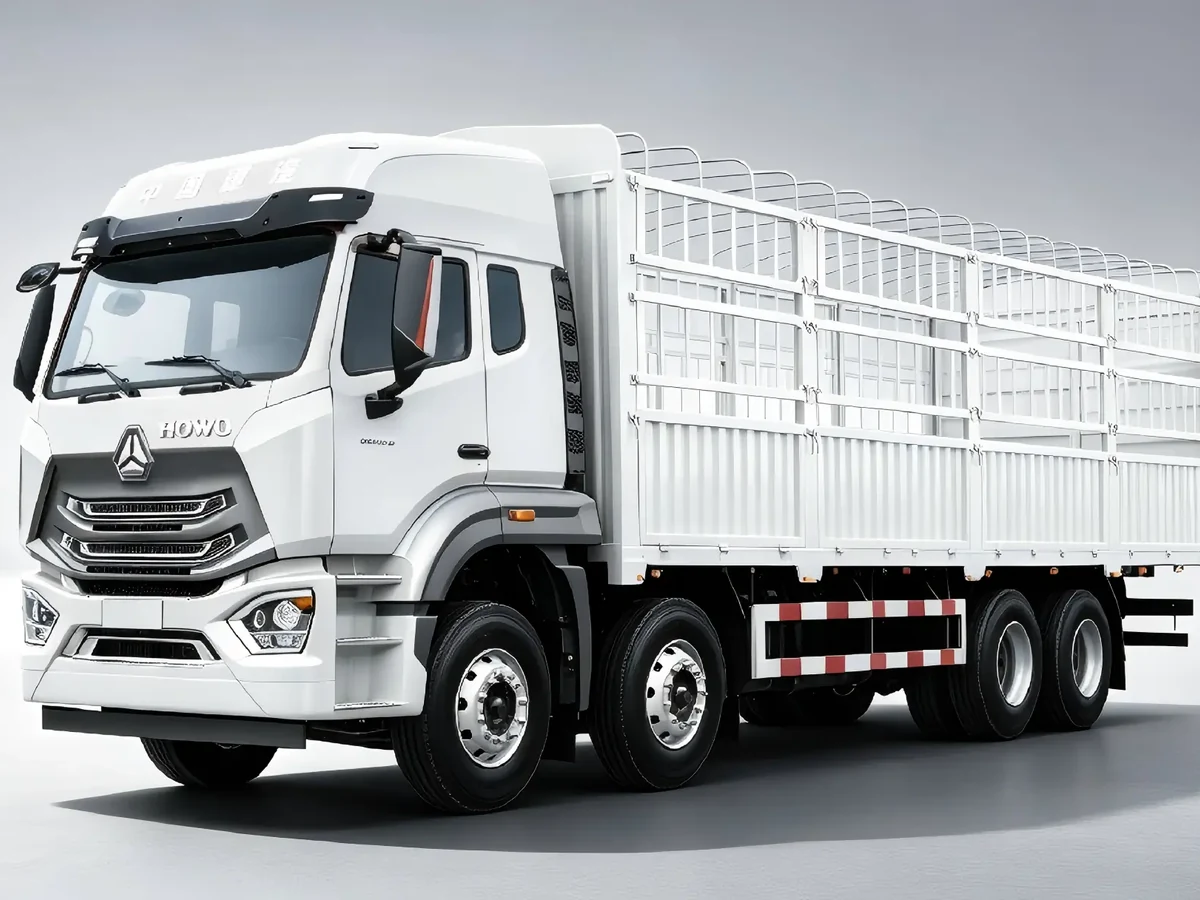
Apply the review to HOWO 8×4 Cargo Trucks
Define body type, internal dimensions, loading access and restraint requirements from the actual freight. Specify individual load masses and unloading order rather than total payload alone.
The heavy duty commercial trucks discussion should therefore connect configuration with the actual long cargo body, multiple axles and handling equipment. Ask the responsible supplier to identify the configuration assumptions and any information still needed from the fleet.
Evidence to request for heavy duty commercial trucks
Convert the operation into a short acceptance matrix. Each requirement needs a proposed configuration, a supporting document and an agreed method of checking it. Resolve conflicting requirements before comparing prices; a larger body, lower tare and heavier reinforcement cannot all be assumed simultaneously.
A useful heavy duty commercial trucks evidence pack combines signed build sheet with body mounting drawings, turning-path checks and representative loading plans. Keep the vehicle identity and specification revision visible so an otherwise valid record is not mistakenly applied to another build.
Compare the available approaches
Use the table when comparing heavy duty commercial trucks proposals. It is a purchasing framework, not a statement that every supplier offers the same equipment.
| Review item | Stronger purchasing basis | Weak basis to clarify |
|---|---|---|
| التكوين | A component-by-component specification | A model name with unspecified options |
| Application fit | the longitudinal centre of gravity of each load arrangement | A general suitability statement |
| Supporting evidence | Signed build sheet | a shorter rigid truck with more delivery trips assumed equivalent |
| Scope control | Written configuration and approved deviations | Options or exclusions left unresolved |
A longer load platform can reduce handling constraints for bulky goods, but it increases the space needed for turning and reversing. A longer platform is not automatically a higher-payload vehicle.
Work through a realistic fleet scenario
Illustrative planning case: A distributor carries long bundled materials to sites with limited turning space. A route that works on paper may still fail at the final customer entrance.
For this case, the heavy duty commercial trucks review should test configuration against the longitudinal centre of gravity of each load arrangement. Start with signed build sheet, then check whether the result remains usable during the demanding part of the cycle. If the evidence is incomplete, assign the missing measurement to the operations or supplier team before finalising the configuration.

Check the complete vehicle interfaces
The following points connect the heavy duty commercial trucks decision to the delivered equipment. Use the applicable supplier documents for operating and maintenance procedures; this article is a procurement guide.
- Record the longest indivisible item and its centre of gravity.
- Check body mounting requirements with the chassis supplier.
- Verify unloading equipment capacity and access.
- Review rear overhang and swept path at constrained destinations.
Avoid assumptions that change the result
When assessing heavy duty commercial trucks, distinguish a supplier catalogue value, a measured result and a contractual commitment. They serve different purposes. Available variants can change with the order, and the complete body or trailer can alter the outcome. Resolve discrepancies in the signed specification rather than selecting whichever number is most favourable.
For heavy duty commercial trucks projects involving long or dense packaged freight, keep the assumptions about the material, route and working equipment together. Revisit the review whenever those assumptions change. A calculation or demonstration remains useful only within the conditions it actually describes.
For background terminology, see the Wikipedia overview of commercial truck configurations. It provides general context; vehicle-specific specifications and operating instructions should come from the responsible supplier.
Prepare a focused inquiry
Review our SINOTRUK HOWO NX 8X4 Cargo Trucks listing as a starting point, then request confirmation of the current configuration. For a heavy duty commercial trucks inquiry, send the destination, route, load description, daily duty, required quantity and your configuration priorities.
Ask the Recheng team for a proposal that states the long cargo body, multiple axles and handling equipment arrangement, the supporting signed build sheet and any unresolved assumptions. You can also use our contact page to discuss the project. Complete the inquiry form below with the operating details so the discussion can move beyond a model name.
Frequently asked questions
Which requirements belong on the order?
Include the complete vehicle configuration, interfaces, operating conditions, documentation and the agreed acceptance evidence.
What is the critical application check for heavy duty commercial trucks?
Check the longitudinal centre of gravity of each load arrangement. For this application, request body mounting drawings, turning-path checks and representative loading plans and relate the result to the agreed vehicle configuration.
Can a catalogue specification settle this heavy duty commercial trucks decision?
Use it to identify the proposed vehicle, then confirm the complete build and the evidence needed for configuration. Catalogue options and completed-vehicle results should not be treated as interchangeable.
Which alternative should the fleet compare?
Compare a shorter rigid truck with more delivery trips on the same duty and evidence basis. A longer load platform can reduce handling constraints for bulky goods, but it increases the space needed for turning and reversing. A longer platform is not automatically a higher-payload vehicle.
What should I send with a heavy duty commercial trucks inquiry?
Send the route, destination, material or load, daily cycle, required quantity and the current question about configuration. Include any existing signed build sheet so the team can identify the next useful check.